Photographs of an Undocumented War
Six plates. Three dates. No war on file.
Recorded history
The archive holds these six plates and knew nothing whatever about them when the record was opened.
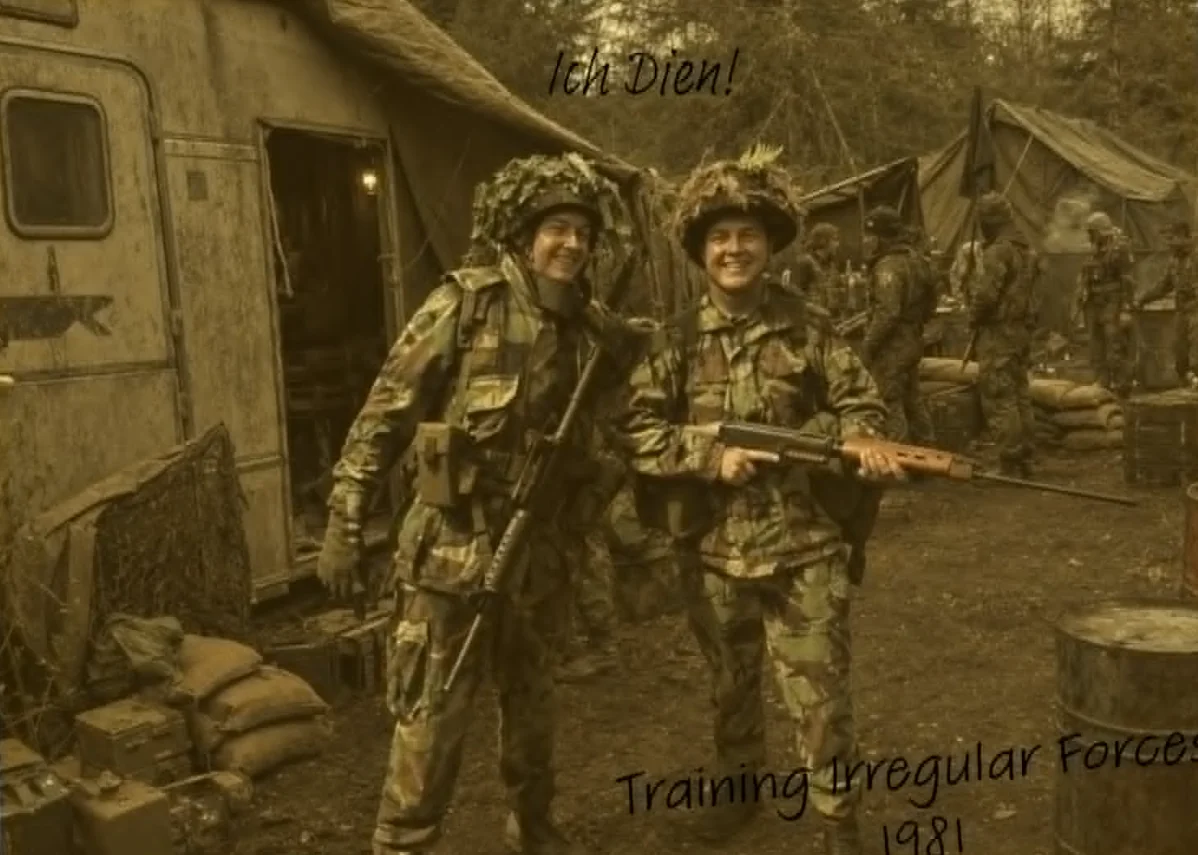
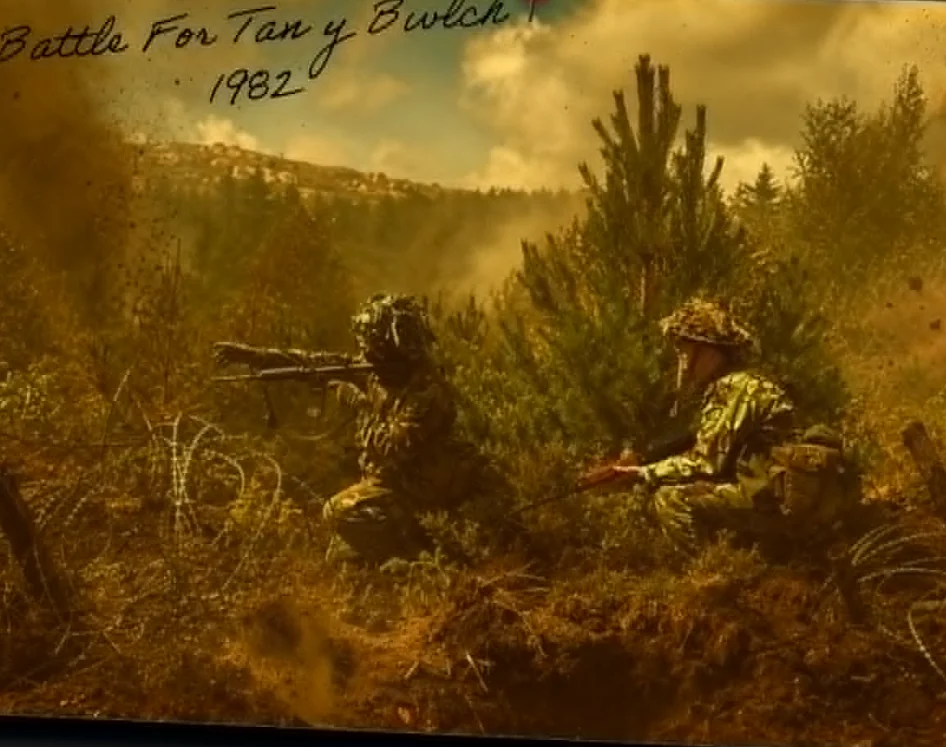
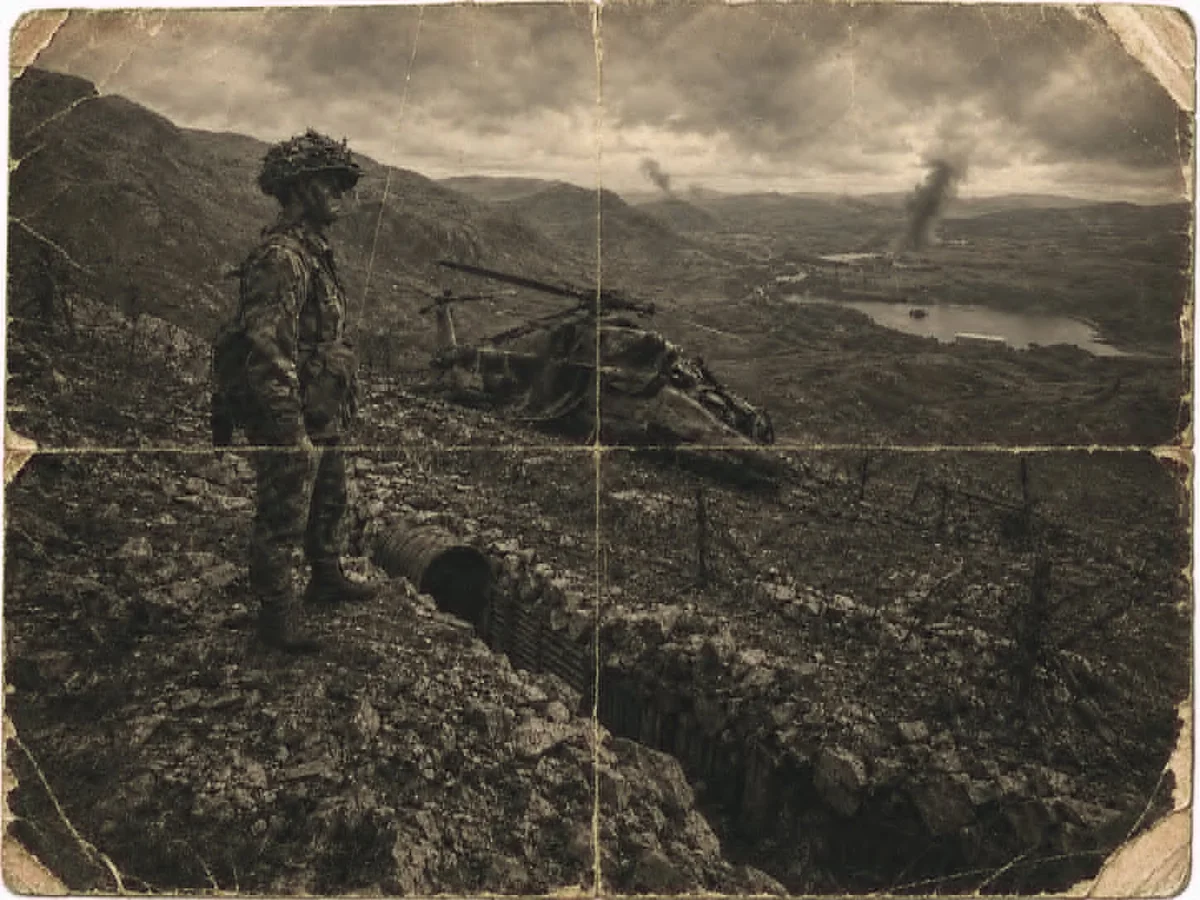
Two of them can now be placed. The men in the 1981 camp photograph have been identified as the Old Soldiers, the plate is theirs, and so is the gun position at Tan-y-Bwlch beside it. That accounts for two objects out of six and for none of the difficulty; what it establishes is who took them, not what world they were taken in. The remaining four are still unattached to anybody.
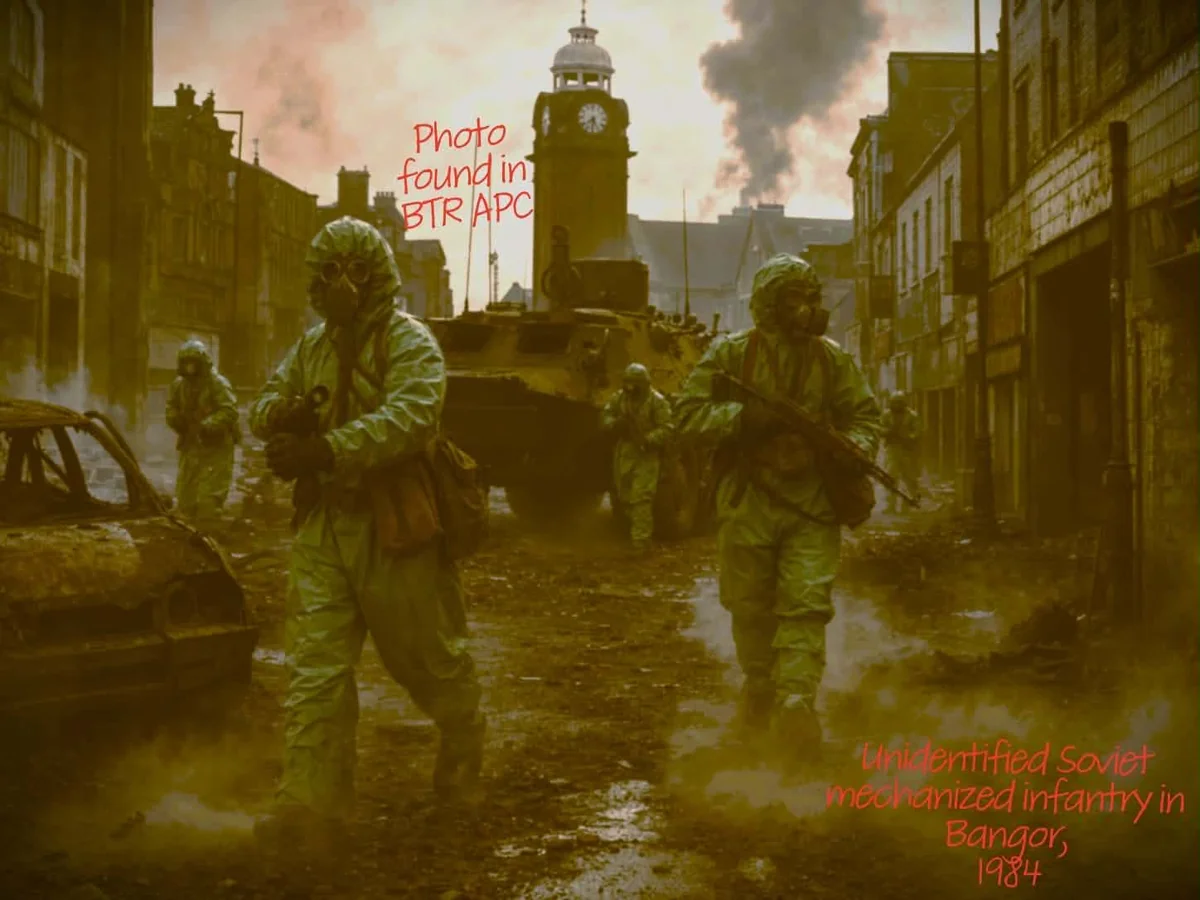
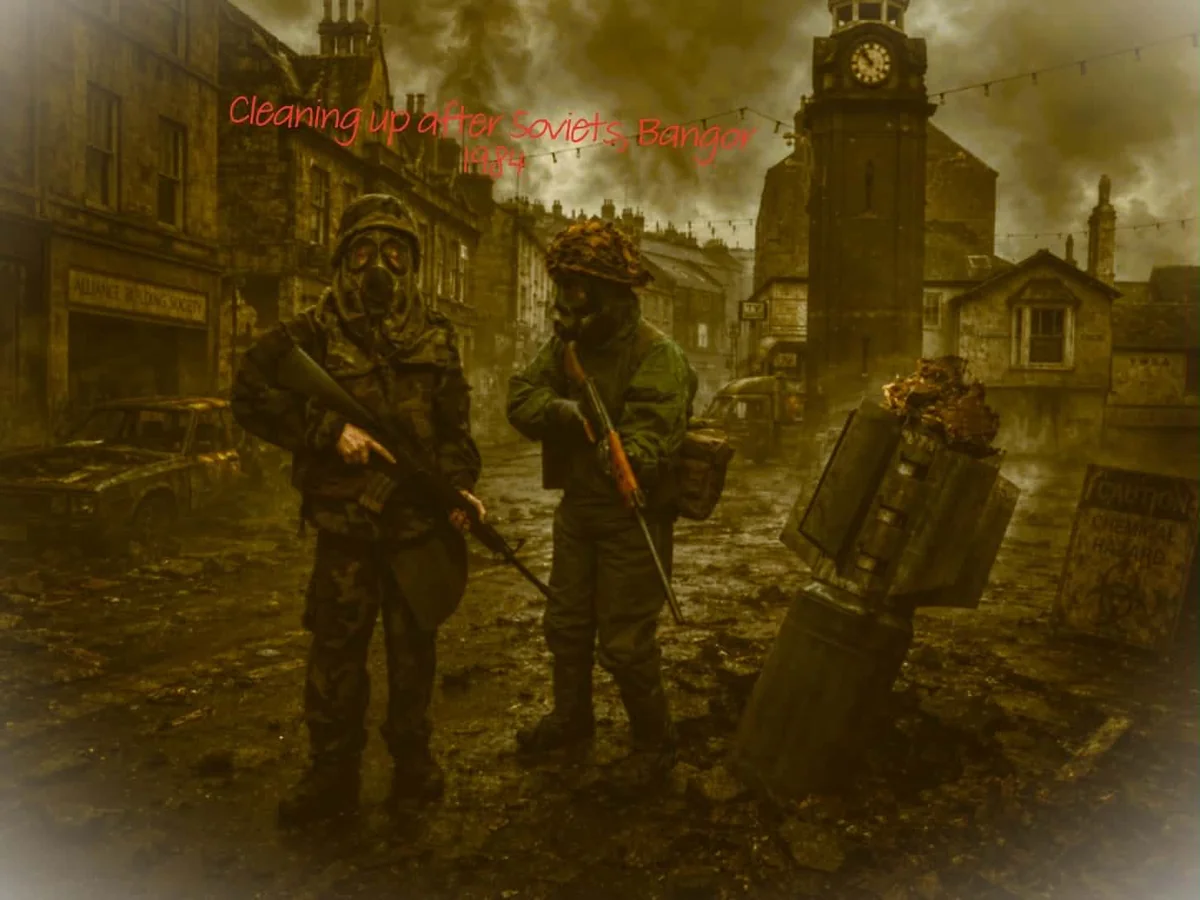
Four of them have been written on. Two hands are distinguishable and so are two inks: a black cursive on the earlier pair, giving a caption and a year, and a red hand on the Bangor pair, which is doing something different. The red hand is not captioning its own photographs. It is recording where one of them was found and what it appears to show, in the manner of somebody sorting material taken off an enemy.
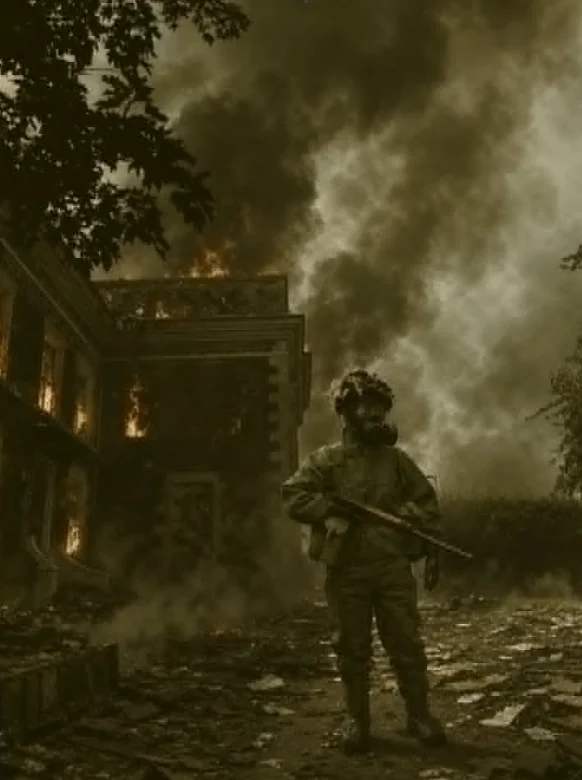
The remaining two carry nothing at all. The archive has grouped them with the other four on the strength of appearance, and says so plainly, because that is not evidence.
The annotated plates
The two without annotation
What they show
Taken together the plates describe a campaign, and describe it in an ordinary way.
There is a training camp, and the caption says the training is of irregular forces, which means somebody expected the fighting to be done by people who were not soldiers yet. There is a prepared gun position in forestry above Tan-y-Bwlch, with wire out in front of it, which means a line somebody intended to hold. There is a foreign mechanised infantry in respirators in a Welsh high street. There is a chemical hazard board on the pavement, put there afterwards by whoever was tidying up. The house is burning and nobody is fighting the fire.
None of it is triumphal. Nobody is posing except the two at the camp, and they are laughing because they have not got to the rest of it yet.
The difficulty
One account the archive holds now describes this war, and it is not independent of these plates.
It is the Battle for Tan y Bwlch, an oral account in wide circulation, sourced in every telling to the two men in the first photograph above. It describes an invasion, a front in the mountains, and a strike on Trawsfynydd. It fits the plates closely, which is not surprising, because two of the plates belong to the men telling it. The archive has one war attested twice by one source, and records that as such rather than as corroboration.
The same account is retold by RENED, the department those two men are reported to work for. The retelling is no more independent of them than their own.
Beyond that one account, the collection still says otherwise. The most sustained account of the collapse describes a world that failed by administration: harvests, then shipping, then prices, then government. No enemy appears in it anywhere and no weapon is fired in it at all. These plates show an enemy, a front, protective equipment issued and used, and a town centre being decontaminated.
The archive sets them beside one another and joins them to nothing. It has no means of establishing whether they describe the same world.
The dates the annotations claim are 1981, 1982 and 1984. The archive cannot verify any of them, and notes only that all three fall before the 1989 crew photograph it already holds, which was taken at a working pumping station by people who were plainly not at war.
Archive notes
- Six plates. Provenance established for two, which belong to their subjects. Unestablished for the other four.
- The two men in the 1981 plate are the Old Soldiers, identified after this record was opened. They are alive and working now.
- Four annotated in two hands: black cursive on the 1981 and 1982 plates, red on the Bangor pair.
- The red hand annotates material it did not produce, including one photograph recorded as found inside an enemy vehicle.
- Two plates carry no annotation. Their inclusion here is the archive's judgement and rests on appearance alone.
- Ground named: Tan-y-Bwlch and Bangor. Neither has been surveyed and both are held only as names.
- Protective equipment is in use in the Bangor plates, and a chemical hazard board appears in one.
- One account on file now describes this war, told by the men in the 1981 plate, who own two of these plates, and retold by the department they are reported to work for. The archive does not treat either telling as corroboration.
- The Bangor pair and the two unannotated plates remain attached to nobody.