Facility 862-B Posters
We prepare today so tomorrow endures.
Recorded history
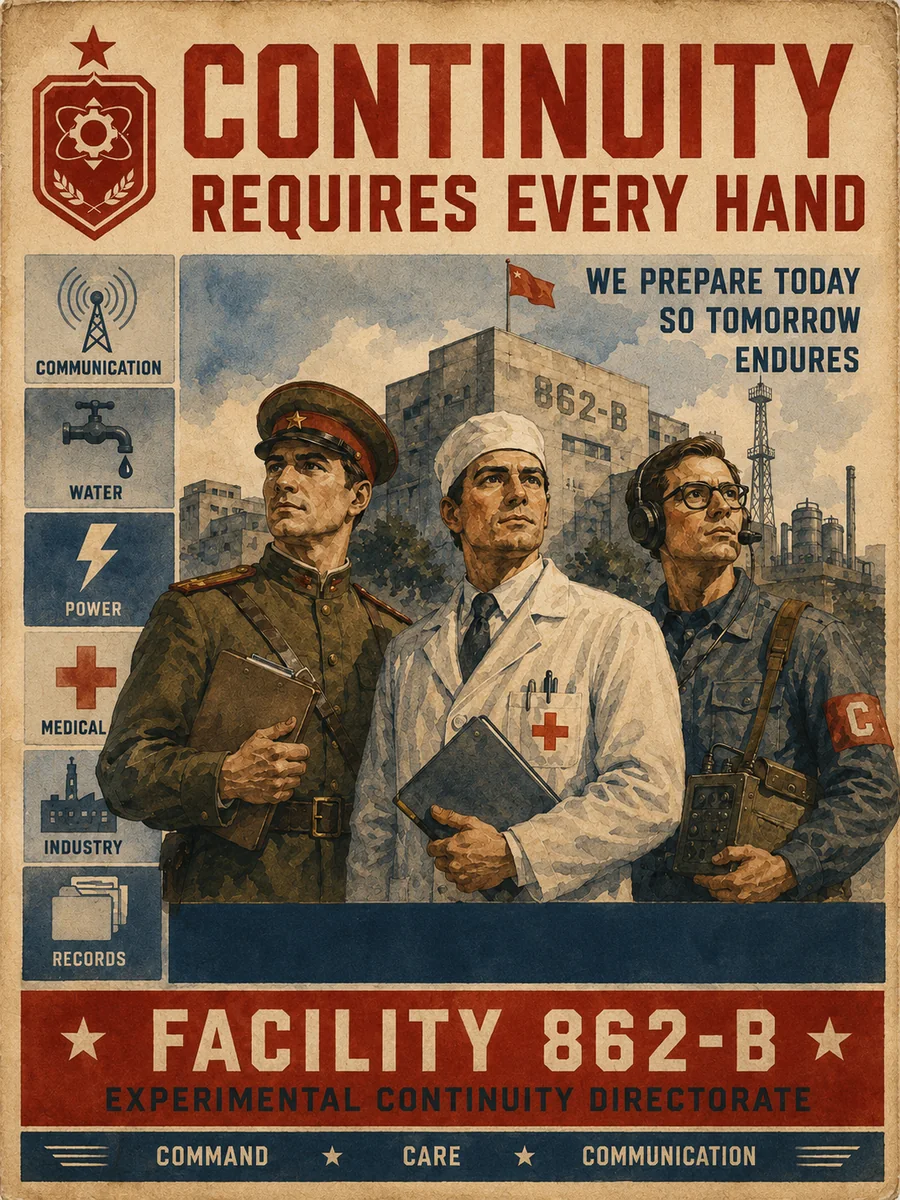
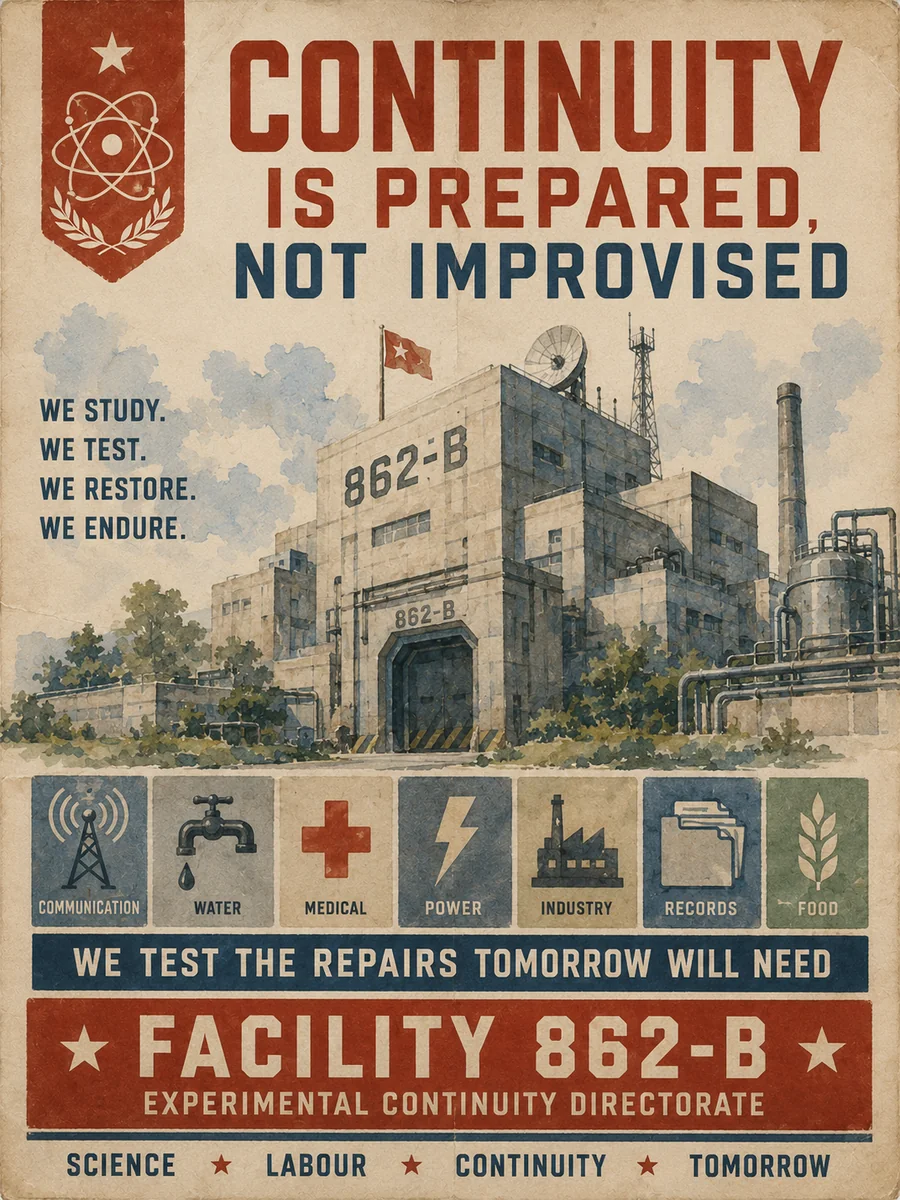
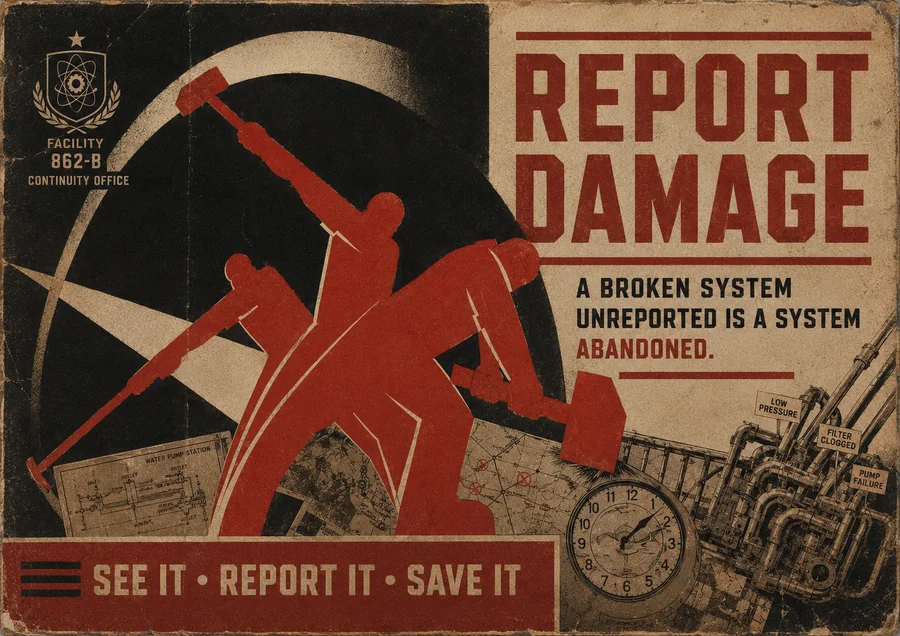
Eight printed plates issued over the Facility's name, and over those of its Continuity Office, its Experimental Continuity Directorate and, on one plate only, a Repair & Maintenance Directorate the archive has no other record of.
They share a visual grammar: heavy sans lettering, a small atomic crest, a strip of pictograms for the services the Directorate considered load-bearing. Those pictograms are worth reading on their own: communication, water, medical, power, industry, records, and on one plate food. That is the list of things somebody decided a civilisation cannot be allowed to lose, printed in the order they thought about them.
What is missing from the list is as informative. No plate depicts a weapon. No plate names an enemy.
The plates
Two directorates
Seven of the eight carry the Experimental Continuity Directorate or the Continuity Office. The eighth does not.
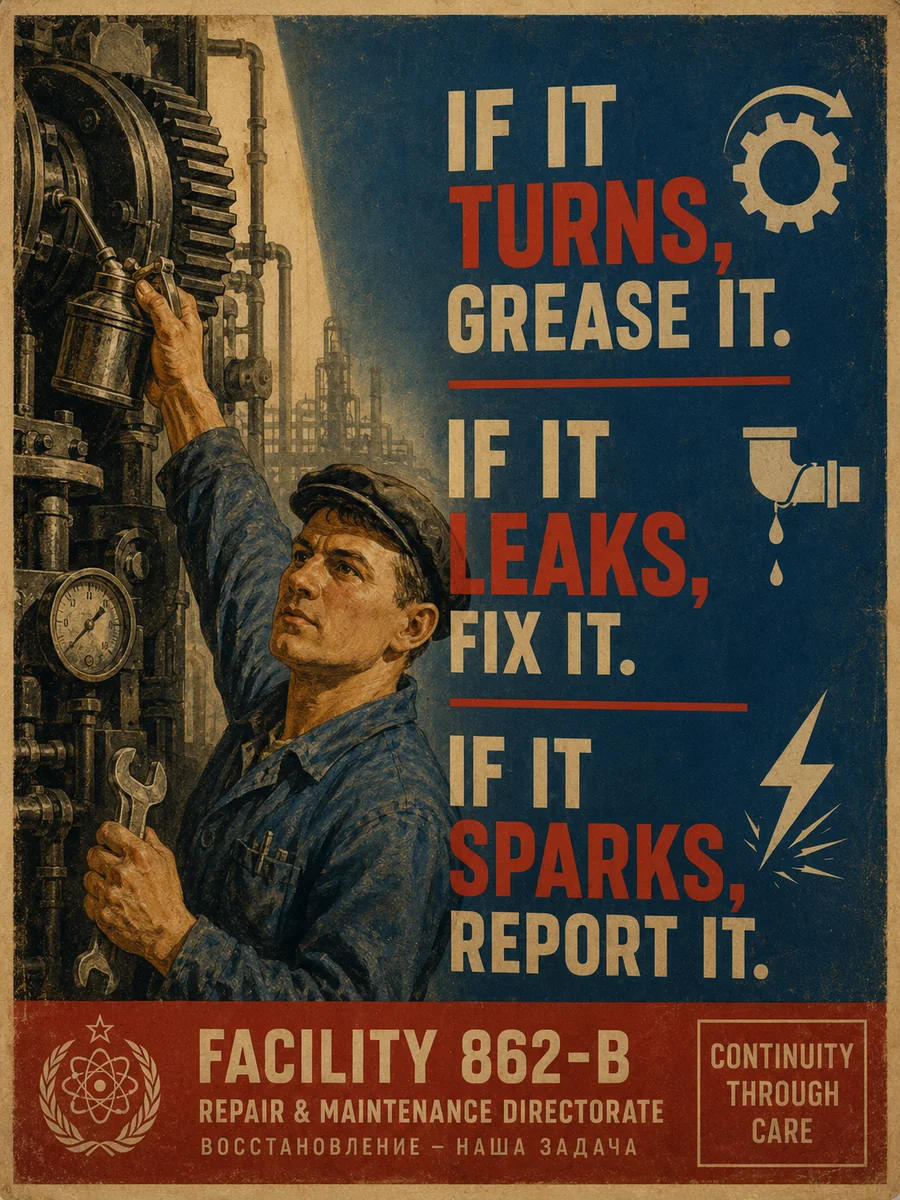
The plate of maintenance rules (grease what turns, fix what leaks, report what sparks) is issued by a Repair & Maintenance Directorate, under the line continuity through care. No other document the archive holds mentions that body. Whether it was a division of the Directorate, a predecessor, or a separate arm answering to the same building cannot be determined from a poster.
What the plate does establish is that somebody at Facility 862-B was responsible for the ordinary upkeep of machinery, and thought it worth printing three rules a person could remember while holding a wrench.
The annotation
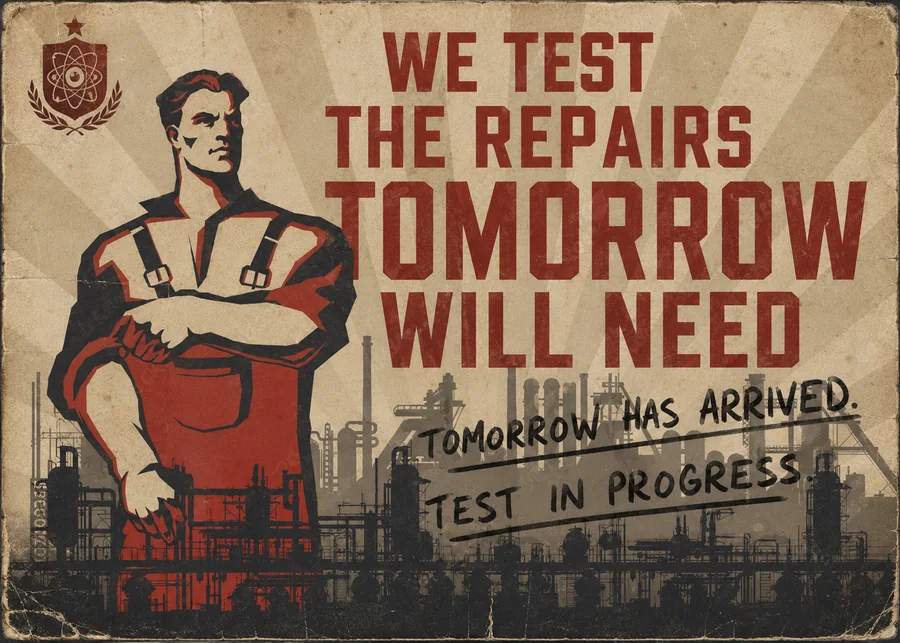
One plate has been written on.
Beneath the printed line we test the repairs tomorrow will need, in a different hand and a different decade, somebody has added: Tomorrow has arrived. Test in progress.
The archive has no means of dating the annotation or identifying who made it. It records only that the remark is not vandalism. Whoever wrote it had understood the poster exactly, agreed with it, and was answering.
What the Facility asked for
Two of the eight are not about machinery at all.
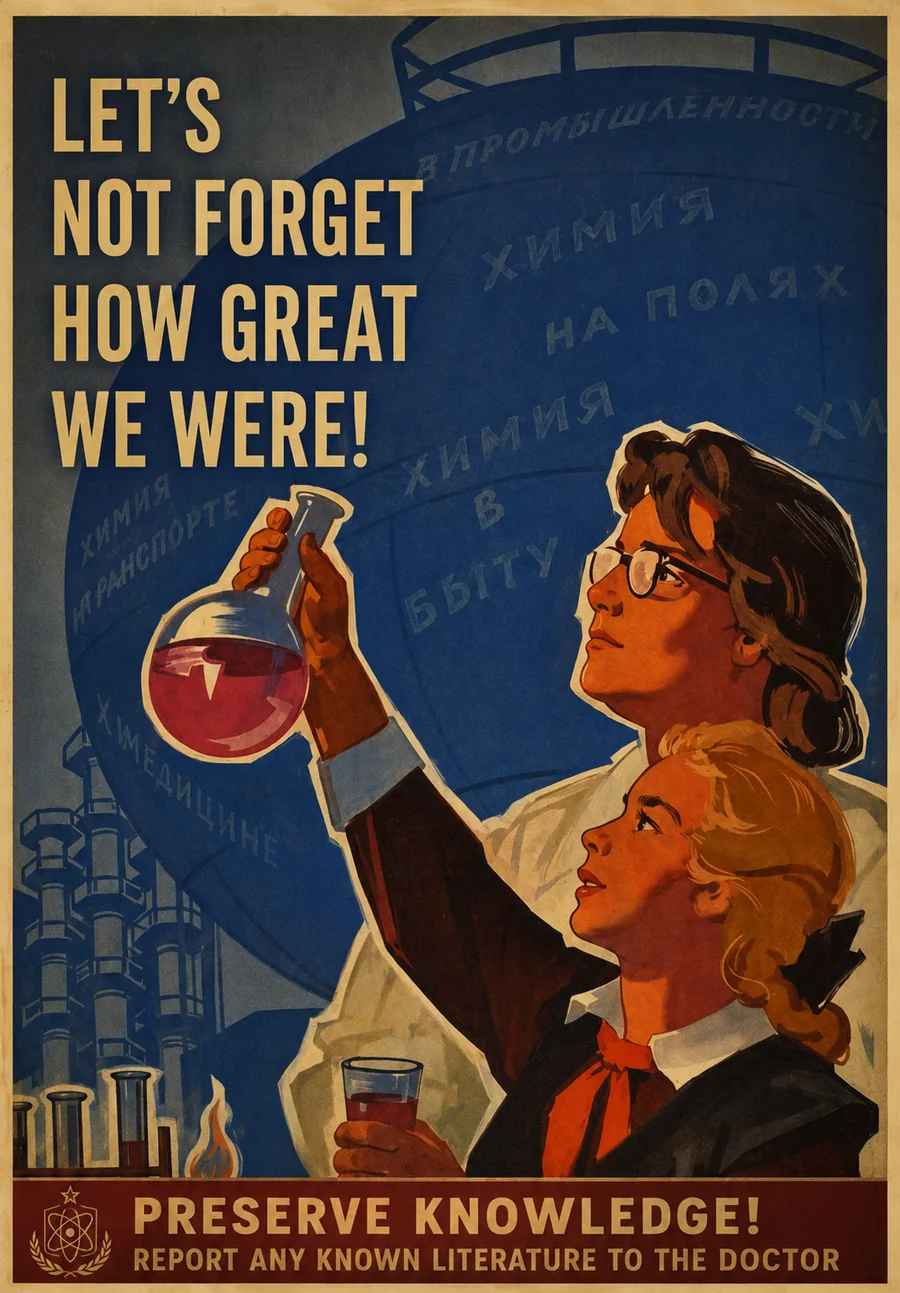
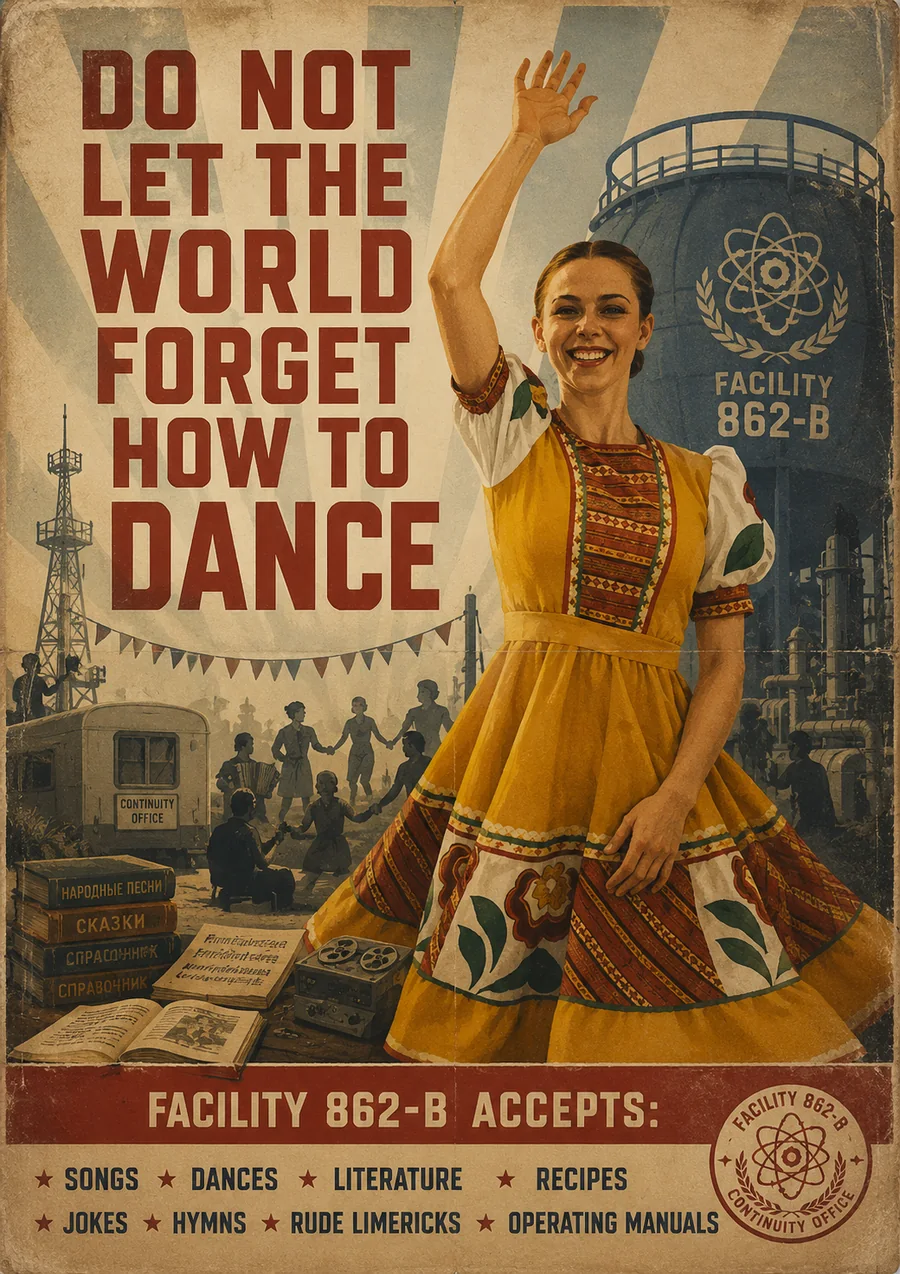
One directs the reader to preserve knowledge and to report any known literature to the Doctor, a designation the plate does not expand and evidently did not need to. The other lists what the Facility was prepared to accept: songs, dances, literature, recipes, jokes, hymns, rude limericks, operating manuals.
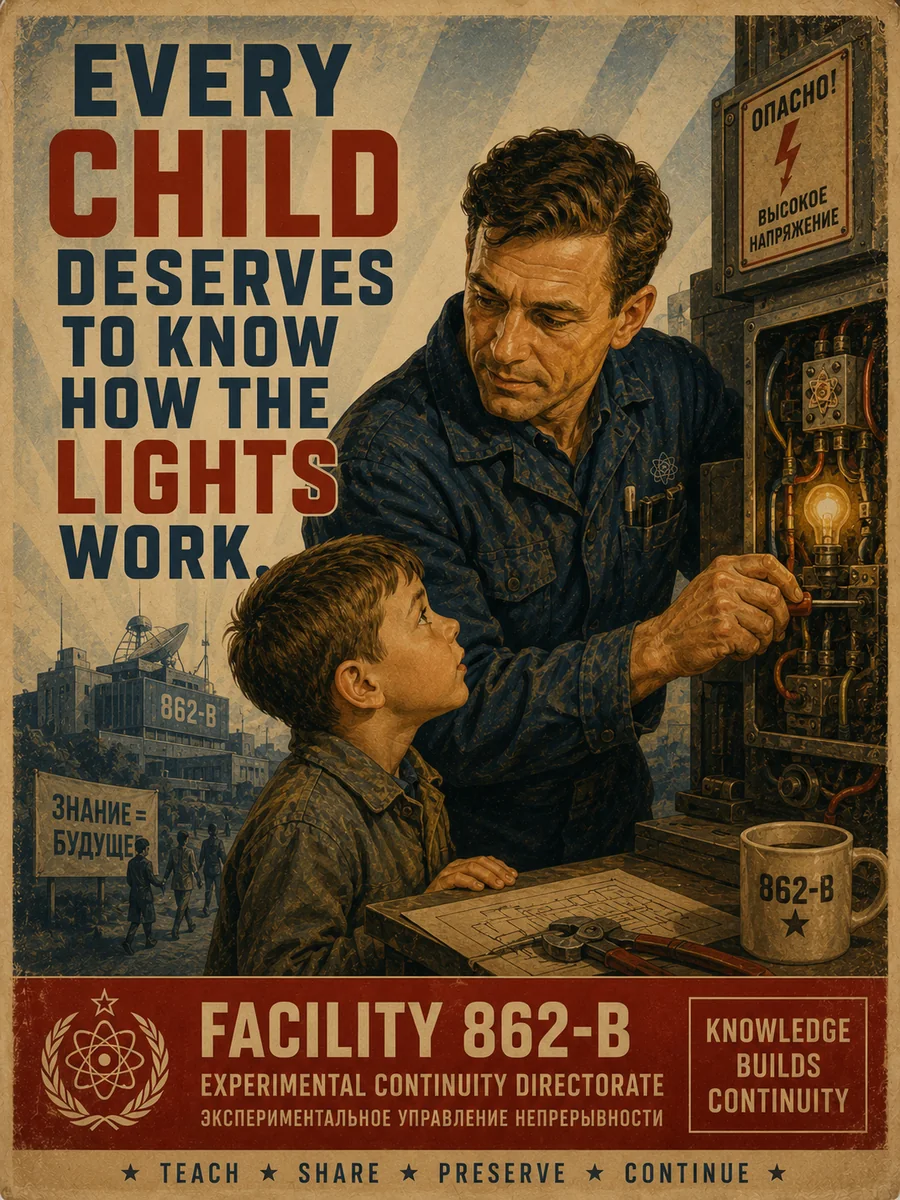
A third is not about machinery either. It shows an engineer opening an electrical cabinet for a boy, under the printed line every child deserves to know how the lights work, over knowledge builds continuity and a footer reading teach, share, preserve, continue.
A body concerned with the recovery of failed systems was collecting rude limericks and teaching children to wire a lamp. The archive takes this seriously rather than as a curiosity. If your remit is that a civilisation must be able to start again, then the operating manual and the dance are the same category of object, and losing either is the same kind of failure.
It bears on Songs for the Long Repair, a gathering of working songs assembled under Dr. Borschtovsky's name. The archive still holds no document establishing Directorate involvement in that collection. It now holds a Directorate poster soliciting songs, and another directing literature to a Doctor.
It records this and, as before, draws no conclusion.
Archive notes
- Eight plates. Issued over the names of the Directorate, the Continuity Office, and one Repair & Maintenance Directorate.
- Pictogram sets name communication, water, medical, power, industry, records and food.
- No plate depicts a weapon or names an enemy.
- One plate carries a later hand-written annotation, undated and unattributed.
- The Facility solicited songs, dances, recipes and jokes alongside operating manuals.
- A Repair & Maintenance Directorate appears on one plate and nowhere else on file.
- Instruction of children in practical systems was Directorate policy, not incidental.
- Literature was to be reported to the Doctor. The plates do not say which.